Paid Media
Check your tracking before you raise your Google Ads budget
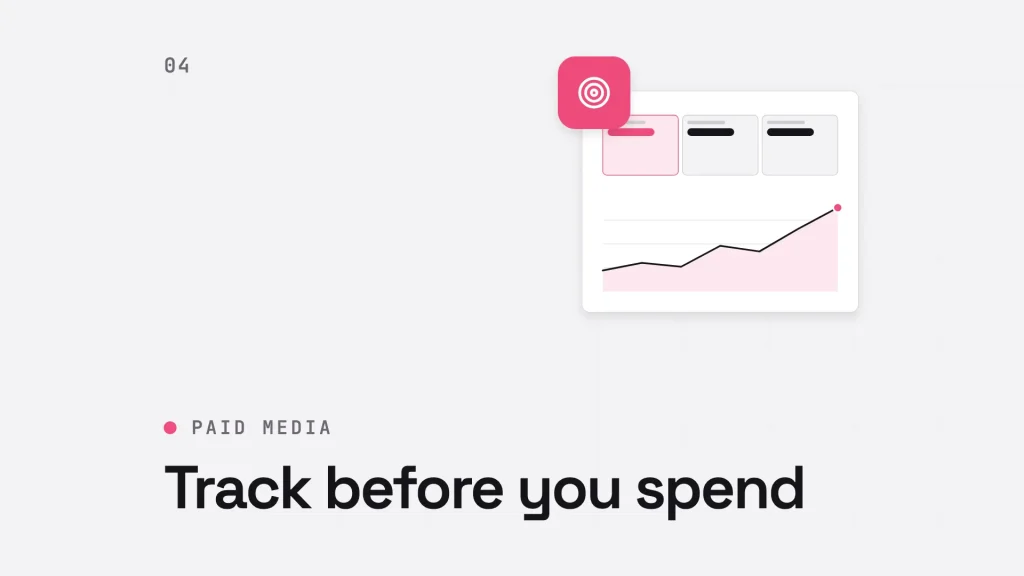
The request usually arrives as a simple question: should we spend more on Google Ads? It is a fair question, and it is often answered with the wrong data. Google Ads reports clicks and conversions on its own terms. Your CRM knows which enquiries became customers. If the two aren’t connected, you are deciding on half the picture.
Before you raise the budget, check that your tracking can answer the question you are really asking: which channels bring in customers, and at what cost?
What counts as a conversion in your account?
Start by listing what your ad account counts as a conversion. Often it is a form submission, a page view or a button click. Those are useful signals, but they are not customers. If your conversions include job applicants, existing customers asking for support, or the same person filling in a form twice, your cost per conversion looks better than it really is.
Ask three questions:
- Which actions count as conversions, and does each one represent a genuine enquiry?
- Are any conversions counted twice, for example by both your analytics and the ad platform?
- Can you follow a converted visitor through to a record in your CRM?
The tracking stack, in plain terms
| Layer | What it should do | Common gap |
|---|---|---|
| Google Analytics 4 | Show how visitors arrive and what they do on your site | Events set up but never checked against real enquiries |
| Google Tag Manager | Manage tracking codes in one place, without changing site code | Old tags left running, so actions are counted twice |
| Funnel-wide tracking | Follow a visitor across your websites and platforms | The trail stops when someone moves to a booking or payment site |
| Your CRM | Record which enquiries became customers | Source and campaign details lost when the lead is created |
Each layer can be correct on its own and still fail as a whole. The usual break is at the hand-off between the website and the CRM, where campaign details are dropped as the form is submitted.
Paid and organic, side by side
Paid search doesn’t work in isolation. Some people who click an ad may have found you through organic search anyway. Comparing paid and organic performance in one view helps you see which channels bring in the most revenue, where you need to improve, and whether your Google Ads campaigns need more investment, or less.
That comparison only works if both channels are measured the same way. If organic visits are tracked through to an enquiry but paid visits only to a click, the numbers can’t be compared.
Choose an attribution model on purpose. Most enquiries follow more than one visit. Decide how credit is shared between those visits, whether it goes to the first, the last or is spread across several, and agree it with sales before the numbers reach a budget meeting. A multi-touch model takes more thought to set up, but it reflects how most business buyers actually decide.
Reporting people will act on
A report is only useful if it reaches the person making the decision, at the right interval. Agree who needs what: a daily view for the people managing campaigns, a monthly view for the budget holder, and custom reports for specific questions. Keep each one focused on what is working, what isn’t, and what you will change as a result.
What this looked like for VeryPC
VeryPC builds computers and customised ICT solutions for businesses and education providers across the UK. Its campaign ROI was hard to measure accurately, and there was no way to follow a lead from first touch to sale or to judge its quality. We implemented Account Engagement, joined it to the leads, opportunities and campaigns in Sales Cloud, and built reports and dashboards for ROI, responses, opt-outs and engagement. We have also supported VeryPC with paid search.
Read the VeryPC case study to see how its marketing data was joined to sales.
Before you change the budget
Raising spend is easy to do and hard to judge afterwards. Check the tracking first. If it holds up, you can make the budget decision with confidence. If it doesn’t, you have found the most valuable fix in the account.
Find out more about our paid search, SEO and analytics services.
Next step
If you are deciding what to do with your Google Ads budget, talk to us about your tracking first.