Reporting · Campaign ROI
VeryPC: lead scoring and campaign ROI you can measure
Account Engagement set up and joined to Sales Cloud, with scoring and grading, branded email templates and campaign reporting.
Most reporting stops at the form fill, so nobody can say which campaigns produce customers. We connect marketing activity to Salesforce so your reports follow a lead through to revenue.
The data usually exists. It just never meets in one place.
Tags and forms change over time, and nobody notices the data has stopped until a report looks wrong.
Campaign details are lost between the website and the CRM, so opportunities look like they came from nowhere.
Reports reward whatever happened just before the form fill and undervalue everything that built the interest.
Scoped per project. Definitions are agreed with sales and marketing before anything changes.
What your website, forms and campaigns record today, where that data goes, and where it gets lost.
The events, fields and definitions agreed with sales and marketing, written down before anything is built.
Campaign and source details carried from the first visit into Salesforce with every new lead.
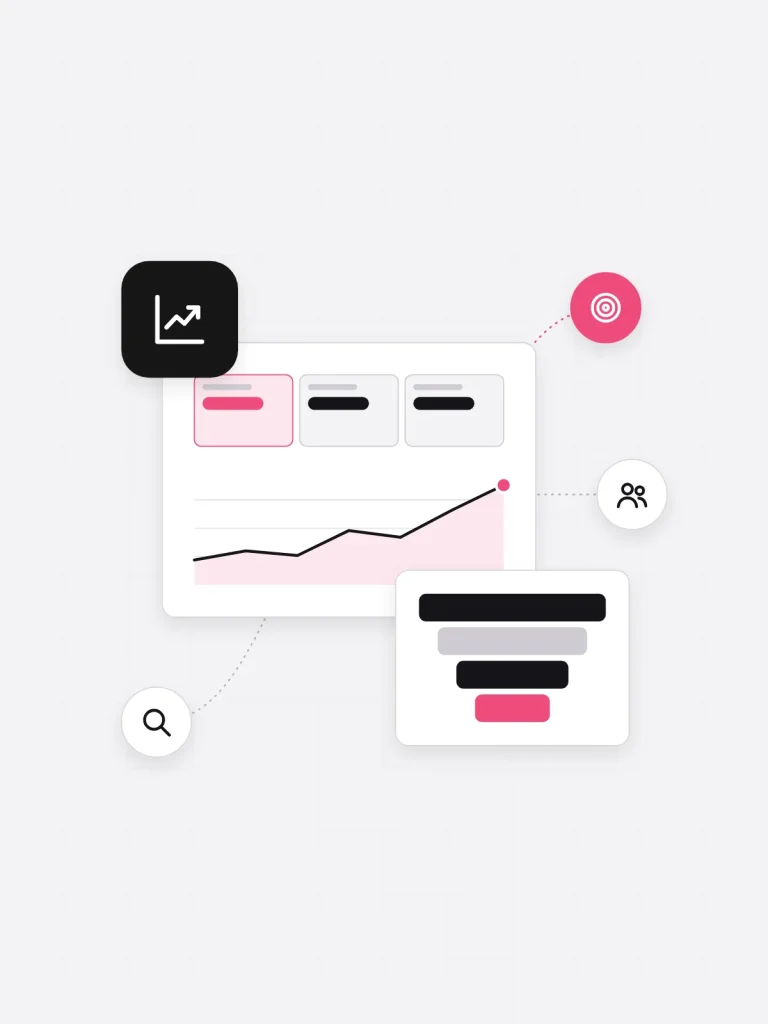
Customer lifecycle and multi-touch attribution reporting, so credit is shared across the whole journey.
Sales and marketing data rules that keep fields consistent, so reports stay accurate after launch.
Reports sales and marketing both sign off, plus training so your team can build its own.
Stages follow our delivery process. Durations depend on how many sites and channels are involved.
Sales and marketing agree a statement of work covering solution, timeline, team and cost.
A tracking audit and a workshop that agrees what counts as a lead, an opportunity and a win.
Events, fields and attribution rules written into a Configuration Blue Print.
Tracking and reports built with regular show-and-tells, then checked against real leads.
Dashboards live, your team trained, and ours on standby for user and technical support.
For the people who'll sign the scope off. Everything here is confirmed in the audit before we quote the build.
Account Engagement set up and joined to Sales Cloud, with scoring and grading, branded email templates and campaign reporting.
Yes. Funnel-wide tracking follows the customer journey across websites and platforms, so you can see where people drop out at each stage.
The audit starts with what you already record, so we keep what works and fix what doesn't rather than starting again.
The one your sales and marketing teams agree reflects how you win customers. We compare models against your own closed deals before recommending one.
Daily, monthly or at whatever interval suits your team. The dashboards are yours, so your team can also run them any time.
Not just as instructed
Tell us the outcome you need, and talk it through with one of our certified Salesforce consultants.